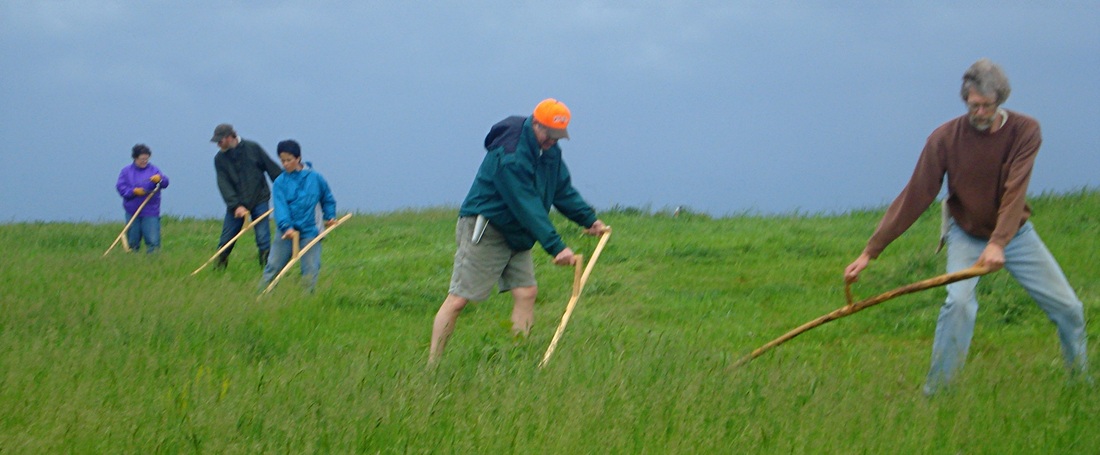
1SR Certified Scythe Instructors:
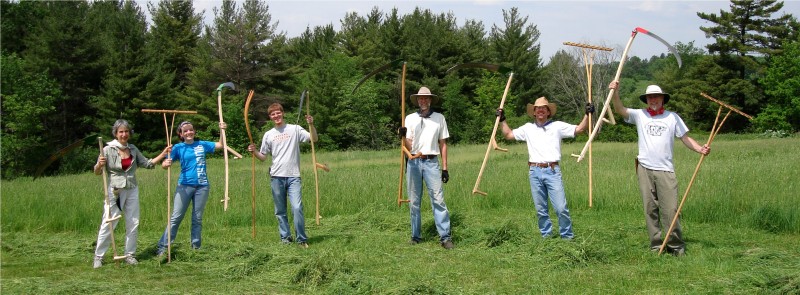
The easiest and best way to learn how to use a scythe, is to attend a workshop, taught by a qualified instructor. I've been asked for years to travel to different areas of the country, to teach scythe workshops. I would love to, but the logistics of leaving my farm for that long, and the expense of traveling, has never made it very feasible. Instead, I decided to implement a scythe instructor training program, modeled somewhat on the Austrian Scythe Instructor training program. My goal is to eventually have 1SR Certified Scythe Instructors within driving distance of everyone in the USA.
I've been teaching scythe workshops since 2006. My teaching experience has given me a greater understanding of the fundamental building blocks that people need in order to develop the skill for high-performance mowing. If you are serious about becoming proficient with a scythe, these 1SR instructors will help you get there. If you want to become an instructor yourself, you can enroll in my 1SR Scythe Instructor program, and become an instructor in your area. Scythe instructor workshops are taught in conjunction with my Advanced Scythe Workshops. Most people need to take my Basic Workshop, and my Advanced Workshops at least once, plus do a lot of mowing on their own, before they can show mastery of the skills necessary to be a 1SR Basic Instructor. - Botan Anderson
I've been teaching scythe workshops since 2006. My teaching experience has given me a greater understanding of the fundamental building blocks that people need in order to develop the skill for high-performance mowing. If you are serious about becoming proficient with a scythe, these 1SR instructors will help you get there. If you want to become an instructor yourself, you can enroll in my 1SR Scythe Instructor program, and become an instructor in your area. Scythe instructor workshops are taught in conjunction with my Advanced Scythe Workshops. Most people need to take my Basic Workshop, and my Advanced Workshops at least once, plus do a lot of mowing on their own, before they can show mastery of the skills necessary to be a 1SR Basic Instructor. - Botan Anderson
Larry Cooper, North Carolina: Advanced Scythe Instructor, Adv. Peening Instructor
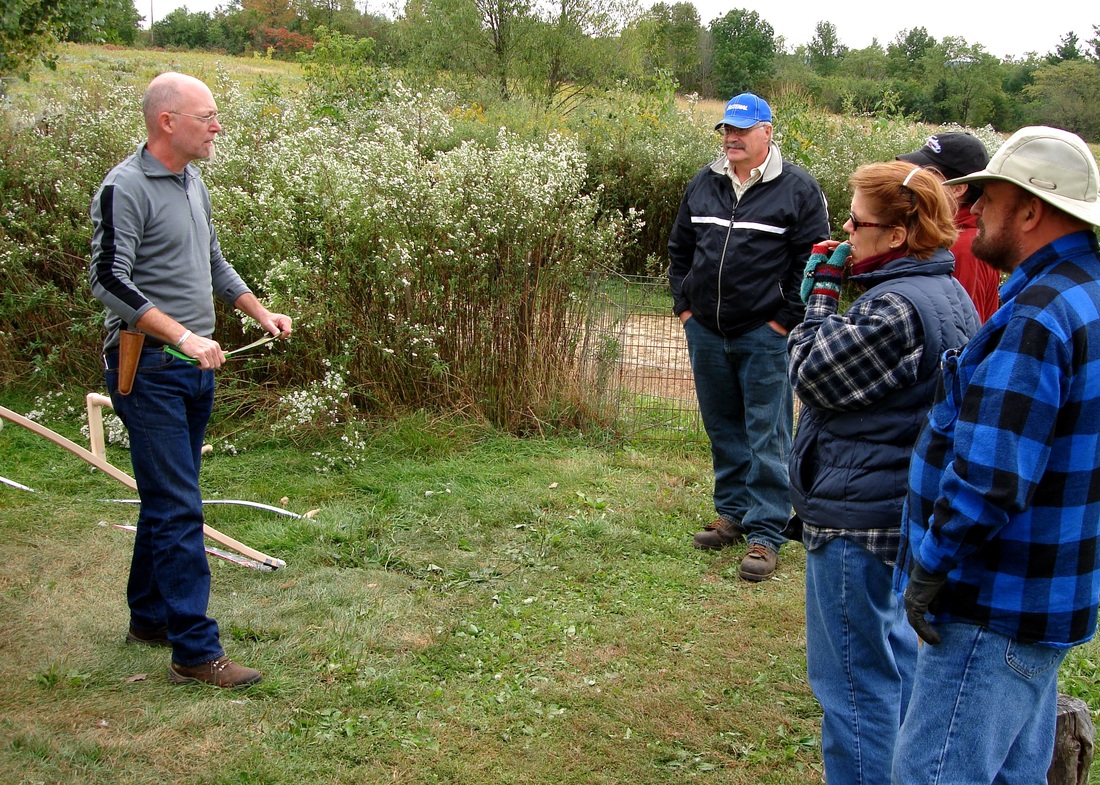
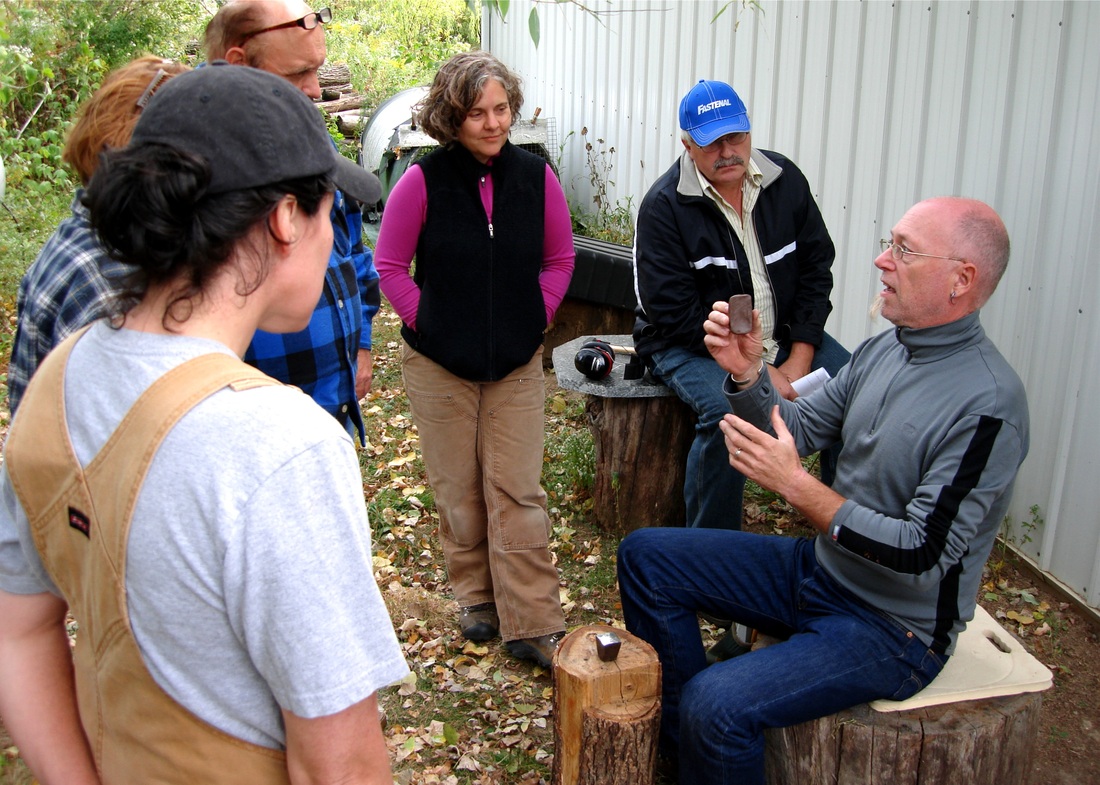
Blacksmith Larry Cooper has taken to the scythe like a duck to water. His 20+ years as a blacksmith, also pretty much made him an instant expert on free-hand peening, as well. He humors me when I tell him he's cleared as an Adv. Peening Instructor. To mow with a scythe blade that Larry has peened is a beautiful thing. Whenever he co-teaches a peening workshop with me, participants get a much greater in-depth understanding of peening, from the parallax of our perspectives. I explain peening with line diagrams, Larry teaches with clay. Larry is particularly interested in oxen, and mowing fresh green feed and making hay with a scythe for them.
June 21st, 2015 The World of the Scythe, Class 274 at Tillers International - Join us for a one day class on the scythe, with 1SR Adv. Scythe Instructor, Larry Cooper. Demonstrations include hay mowing, cutting hillsides, ditches and under fences, hay management for the small farm, creating a keen cutting edge with a hammer and peening anvil and maintaining that edge by honing using a whetstone. We’ll mow an area and show how to manage the cut grass with a simple collection of hand tools. There will be plenty of hands-on instruction and practice.
Learn to adjust the scythe to your body and correct movement for mowing. Bring your scythe to class if you have one, have it evaluated for fit and sharpness. Scythes will be provided to try. Discussion of different scythes will also be part of the class. NOTE: Class starts earlier than usual!
Learn to adjust the scythe to your body and correct movement for mowing. Bring your scythe to class if you have one, have it evaluated for fit and sharpness. Scythes will be provided to try. Discussion of different scythes will also be part of the class. NOTE: Class starts earlier than usual!
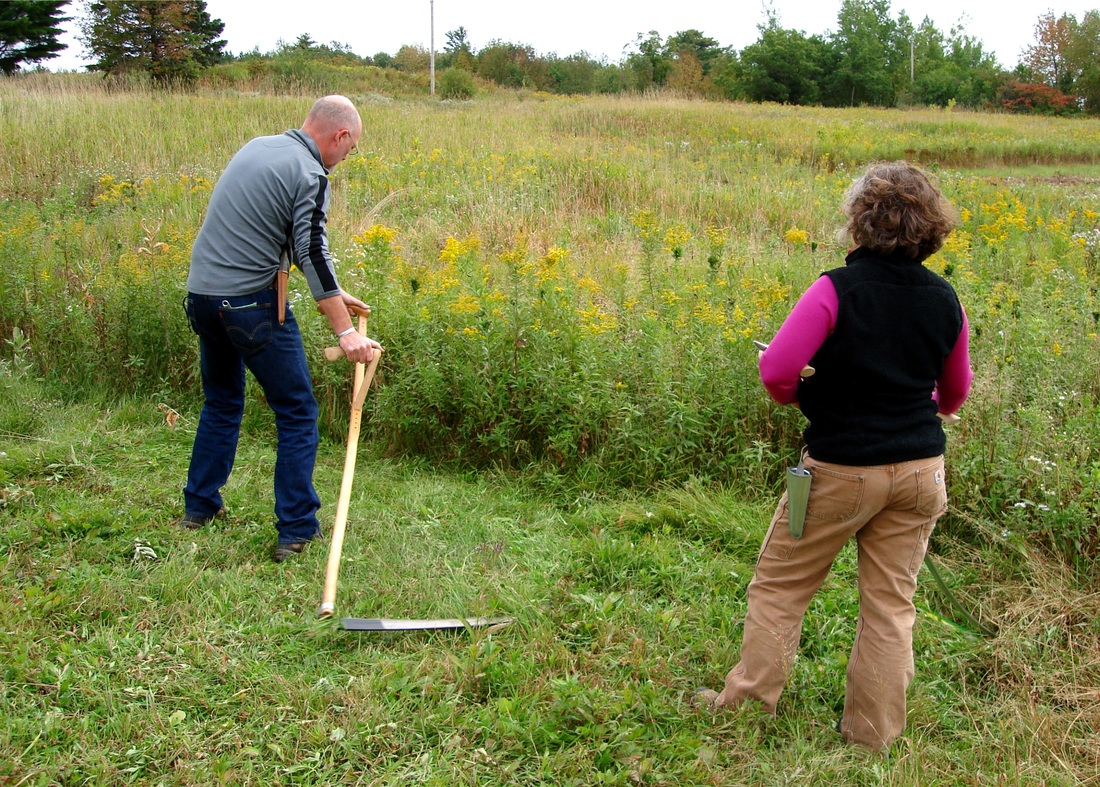
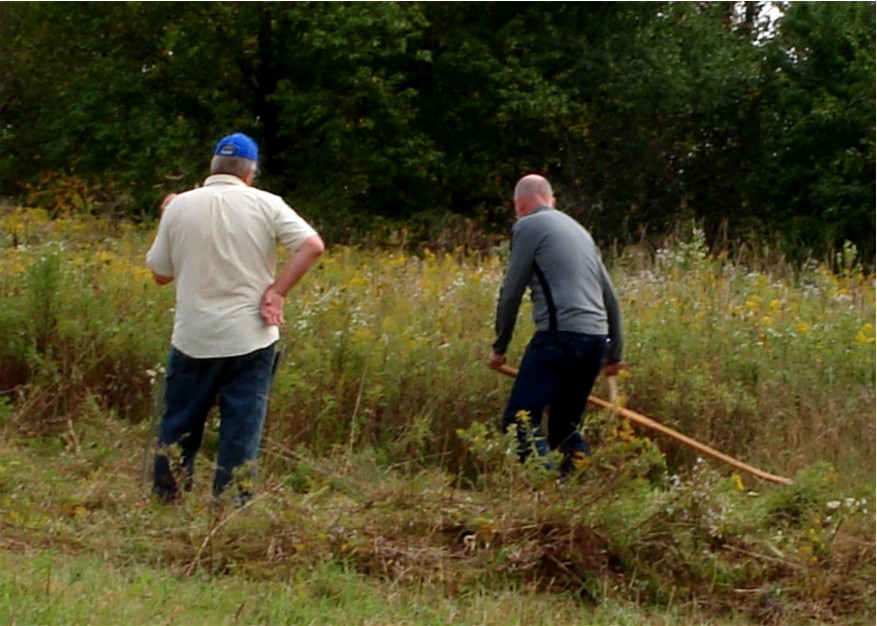
Andy Graybeal, Ohio: Basic Scythe Instructor
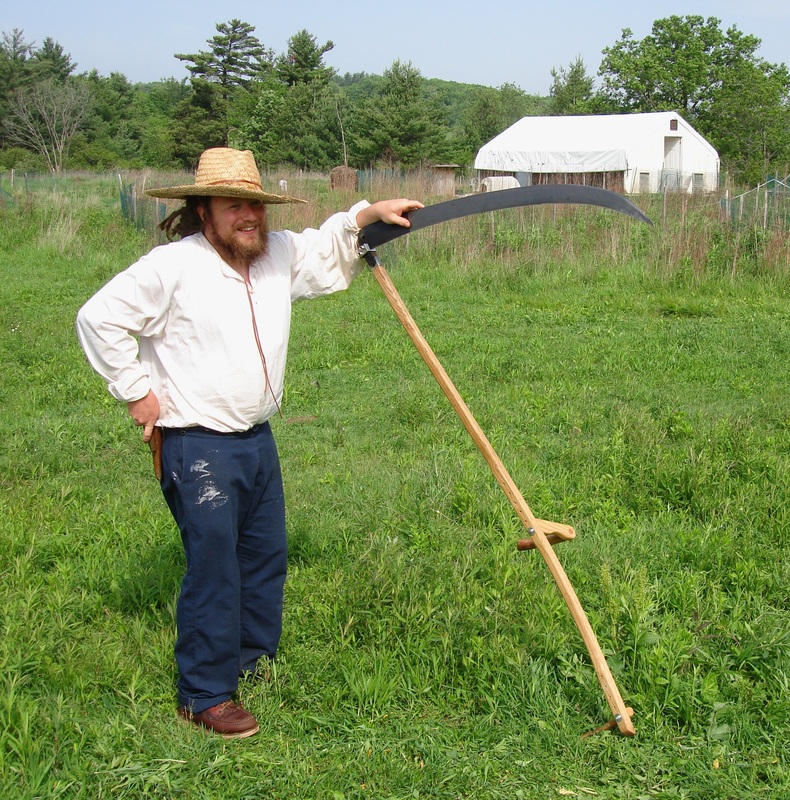
Andy's been slowly practicing with a scythe for 4 seasons as of 2012. 2013 was his first epiphany with a good snath, a sharp blade, and meaningful peening as taught by the 1SR peening manual & videos. He is still in many ways a beginner, and looks forward to learning and getting better with time. It's his first year with a field of his own to practice with, and his lady and himself hope to be able to manage it and make hay without the aid of engines. For workshops and lessons, contact Andy at andy@knivesandchives.com. Andy is also an expert on open software and helped me switch over to Ubuntu software.
Scythe Demo: September 11- 13, 2015, at the Ohio Pawpaw Festival. See http://ohiopawpawfest.com/ for more info.
Scythe Demo: September 11- 13, 2015, at the Ohio Pawpaw Festival. See http://ohiopawpawfest.com/ for more info.
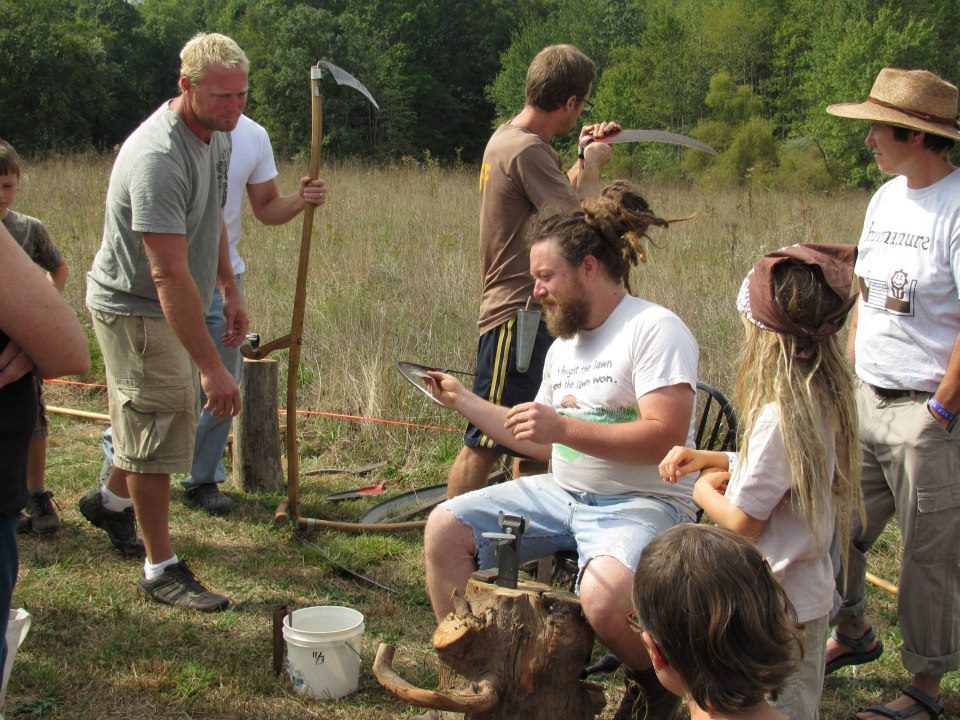
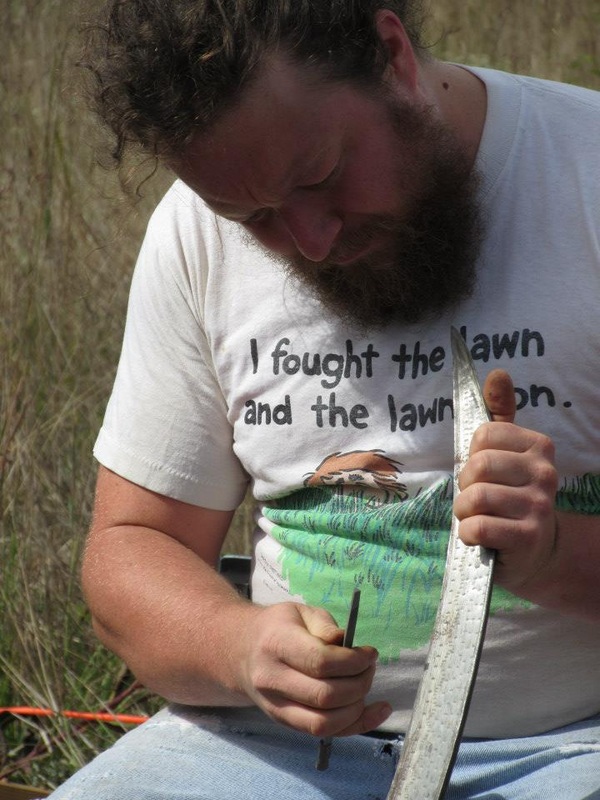
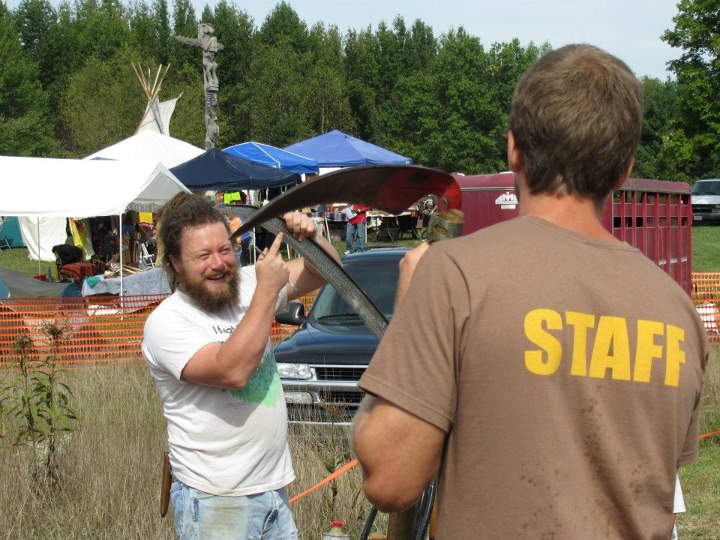
Mary Montes, Southern California: Basic Scythe Instructor
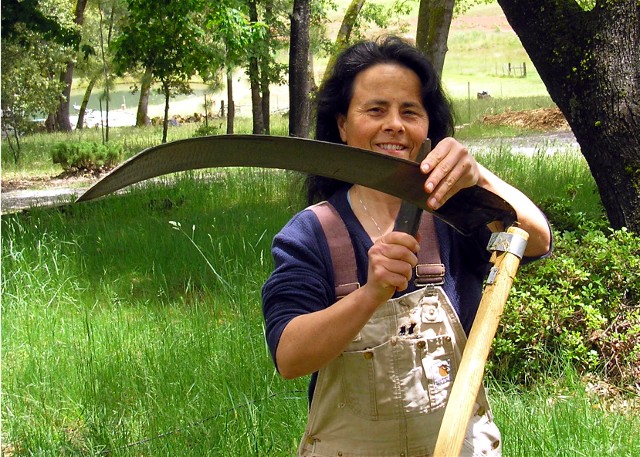
Mary Montes is a veteran of my 2 Day Haying workshop in Viroqua, plus has worked with me individually at my farm. One of her interests is mowing mulch lines on contour for water conservation, for gardening in arid areas.